

+918048052772

Currently it only shows your basic business info. Start adding relevant business details such as description, images and products or services to gain your customers attention by using Boost 360 android app / iOS App / web portal.

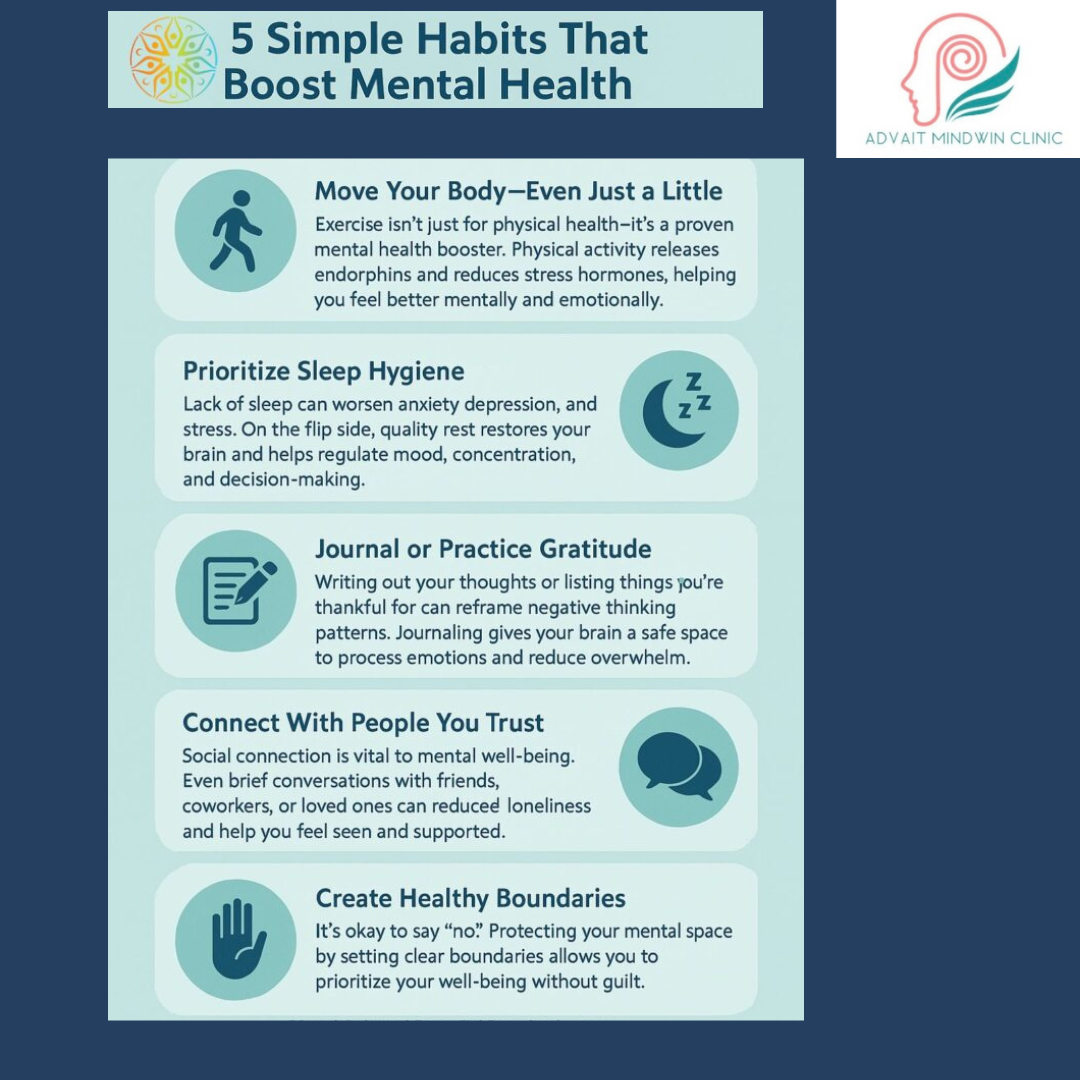
In a world that often feels like it's moving at 100 mph, prioritizing your mental well-being isn't just a 'nice-to-have'—it's a necessity. The good news is that boosting your mental health doesn't always require a total life overhaul. Research from 2025 highlights that small, consistent shifts in our daily routines can lead to significant improvements in mood, resilience, and clarity. Here are 5 science-backed habits to help you build a stronger, happier mind this year. 1. Master Your 'Sleep Hygiene' We often treat sleep as a luxury, but it is actually the biological foundation of mental health. Experts are increasingly emphasizing 'sleep hygiene'—the habits that signal to your brain it’s time to rest. Poor sleep isn't just about being tired; it’s linked to higher levels of cortisol (the stress hormone) and increased irritability. The Habit: Aim for 7–9 hours of sleep and stick to a consistent wake-up time, even on weekends. Pro Tip: Create a 'digital sunset' by putting away screens 60 minutes before bed. The blue light from phones suppresses melatonin and keeps your brain in 'alert mode.' 2. Practice 'Forest Bathing' (Nature Immersion) The Japanese practice of Shinrin-yoku, or forest bathing, has gained massive scientific backing recently. It’s not about hiking or intense exercise; it’s about simply being in nature and engaging your senses. Studies show that just 20 minutes in a green space can significantly lower blood pressure and reduce symptoms of anxiety. The Habit: Spend at least 20 minutes outside daily. If you can’t get to a forest, a local park or even a tree-lined street works. Pro Tip: Leave the headphones at home. Focus on the sound of the wind, the texture of the bark, or the scent of the rain to ground yourself in the present moment. 3. Prioritize 'Micro-Movements' You don’t need to run a marathon to get a 'runner's high.' In 2025, the focus has shifted toward 'exercise snacks'—brief bursts of movement throughout the day. Physical activity releases endorphins and BDNF (a protein that supports brain cell growth), which act as natural antidepressants. The Habit: Incorporate 5–10 minute movement breaks every few hours. This could be stretching, a quick walk, or a few squats. Pro Tip: Try bodyweight resistance exercises. New research suggests that strength training is uniquely effective at improving cognitive function and reducing 'brain fog.' 4. Cultivate 'High-Quality' Connections In an era of digital 'likes, ' we are lonelier than ever. Mental health isn't just internal; it's social. Meaningful human connection acts as a buffer against stress and provides a sense of belonging that is vital for emotional stability. The Habit: Schedule one 'real-time' interaction per day. This could be a phone call, a coffee date, or even a deep conversation with a neighbor. Pro Tip: Share a meal. Recent data suggests that regularly sharing meals with others is one of the strongest indicators of high subjective well-being and life satisfaction. 5. Start a Daily Gratitude Practice Our brains are naturally wired with a 'negativity bias'—we notice what goes wrong more easily than what goes right. Gratitude is the tool that rewires this circuit. By intentionally looking for the good, you train your brain to find more of it.


