

+918048052772

Currently it only shows your basic business info. Start adding relevant business details such as description, images and products or services to gain your customers attention by using Boost 360 android app / iOS App / web portal.

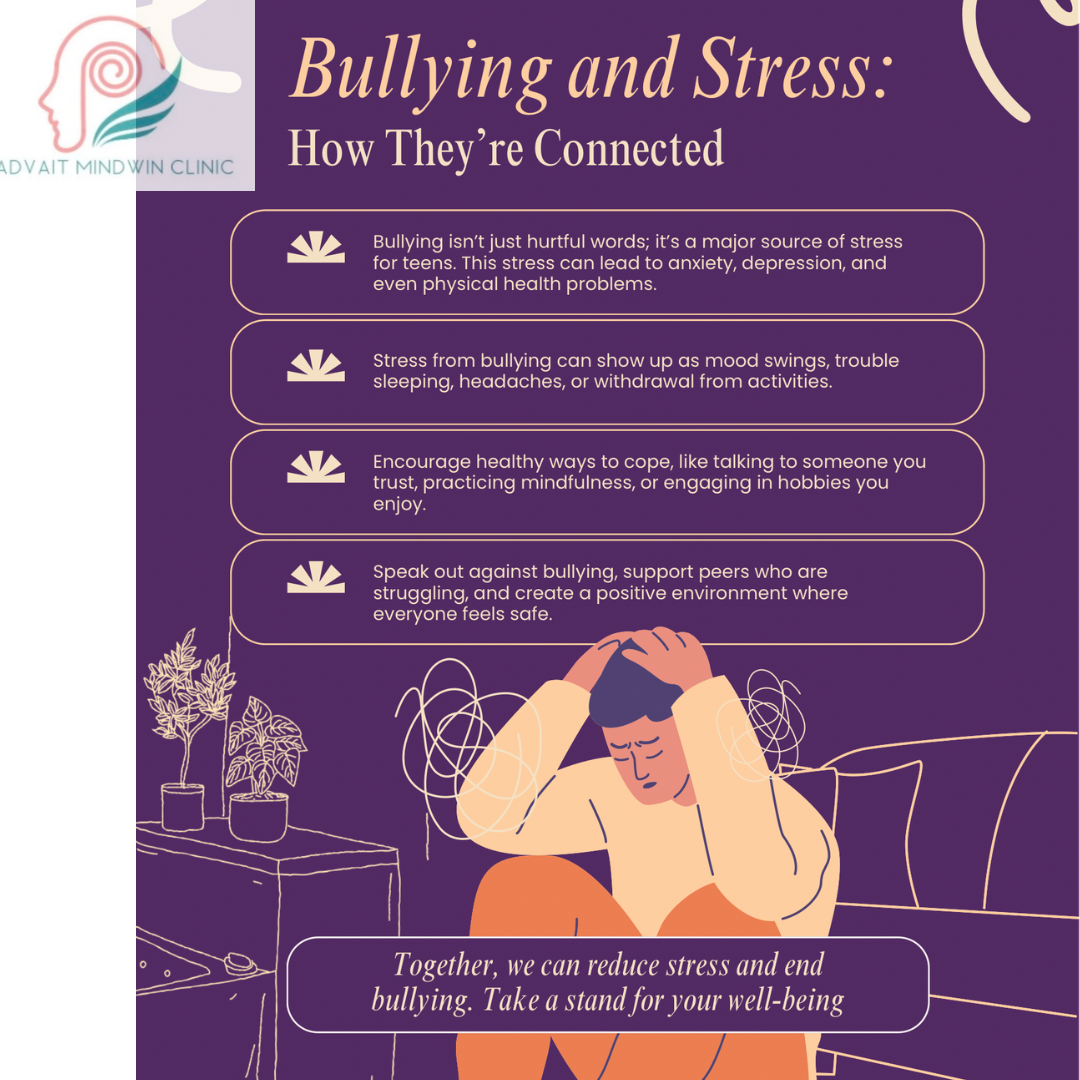
Most people think of bullying as a series of isolated 'bad days' or schoolyard scraps. In reality, bullying acts as a chronic stressor that rewires how the body and mind respond to the world. It’s not just about the moment of conflict; it’s about the toxic aftermath. How Bullying Triggers the Stress Response When someone is bullied, their body enters a state of 'high alert.' This isn't just a feeling—it’s a physiological shift. The Survival Loop: The brain’s amygdala (the alarm system) signals the release of cortisol and adrenaline. While these hormones help us in short-term danger, staying in this state for weeks or months leads to allostatic load—the 'wear and tear' on the body. Hypervigilance: Victims often develop a 'scanned' mindset, constantly looking for the next threat. This prevents the nervous system from ever returning to a baseline of safety. Physical Fallout: This chronic stress often manifests as headaches, stomach issues, sleep disturbances, and a weakened immune system. The Mental Health Ripple Effect The connection between bullying and stress isn't a straight line; it's a downward spiral. The persistent stress of being targeted often leads to: Reduced Resilience: Constant criticism or exclusion erodes self-esteem, making it harder to bounce back from minor life setbacks. Cognitive Fog: High levels of stress hormones can actually impair the prefrontal cortex, making it difficult to focus, learn, or make decisions. Long-term Anxiety: What starts as stress in response to a bully can evolve into generalized anxiety or social withdrawal long after the bullying has stopped. A Note on Resilience: It’s a common myth that bullying 'toughens you up.' Science suggests the opposite: chronic stress in formative years can make individuals more sensitive to stress later in life, not less. Breaking the Cycle Addressing the stress caused by bullying requires more than just 'ignoring it.' It involves: Restoring Safety: Removing the threat is the first priority. Co-Regulation: Finding supportive friends, family, or counselors to help 'calm' the overactive nervous system. Mindfulness & Agency: Engaging in activities that rebuild a sense of control and physical presence.


